



Introduction: Iteration Logs That Keep Better Takes Findable
The painful version-control moment usually arrives after the team has already found something good. Version 04 has the perfect eye movement, but version 06 has the cleaner hand pose. Someone brightened the background in version 07, then the whole scene stopped matching the previous episode. The approved look exists somewhere in the export folder, but nobody can prove which prompt, reference, timing note, or style change created it.
AI anime iteration is not just "try again until it looks better." Each retry changes evidence. If you do not record the variable, the reason, and the affected assets, you cannot repeat the win or avoid the failed branch. Style version management has the same problem at project scale: one upgraded palette, line-weight rule, or compositing pass may improve a new shot while making old shots impossible to cut beside it.
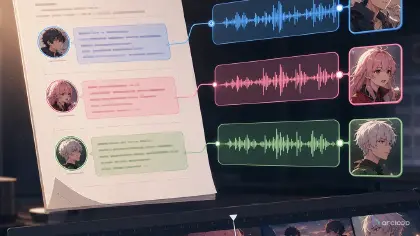
This guide combines shot version iteration and style version management into one ArcLoop workflow. Use Version Iteration Management for the log, Style Formula when the visual rule itself changes, and AI Anime Reference Selection when you need to know whether a character sheet, style pack, storyboard, or scene reference caused the change.
The target is simple: every version should answer four questions. What changed? Why did it change? Did it work? Which shots or assets now depend on that version?
Core Principles for AI Anime Version and Style Iteration
Change one meaningful variable per pass. "Make it better" creates useless evidence. "Keep version 03 identity and camera, change only lantern brightness from soft pulse to single sharp glint" gives the next reviewer something to compare.
Log the reason, not only the number. Version names such as shot12_v5_final_new2 do not help. A useful log says, "v05: slower turn to preserve suspicion; rejected because sleeve covers the key." The reason is what makes the next decision faster.
Separate shot iteration from style versioning. A shot iteration changes a local detail: expression, hand pose, camera distance, action timing, prop brightness. A style version changes a reusable rule: palette, line thickness, shadow density, texture, grain, aspect crop, or final compositing. Mixing them makes it hard to know which old shots need updates.
Never approve a style upgrade on one attractive still frame. A style version must be tested across at least one close-up, one medium shot, and one environment-heavy shot. If it only works on the hero frame, it is not a project style yet.
Tie approvals to assets. If a new style version affects the protagonist sheet, the market background, the fight template, and the trailer crop, list those assets. Otherwise, the project quietly splits into old and new looks.
Step-by-Step Version Iteration Workflow
Start with a baseline packet. It should include the shot beat, approved character sheet, scene reference, camera note, style version, prompt, and review checklist. If the baseline is vague, the iteration log will only record guesses.
Name the first output honestly. Call it draft v01, not final. Add the generation goal in one line: "Test whether the character recognizes the broken astrolabe before the guard enters." This goal decides what the reviewer should watch.
Review against fixed anchors before creative taste. Check identity, prop state, screen direction, action readability, crop, and style version. A take can be beautiful and still fail if the approved style was flat dusk colors and the new version adds glossy neon shadows.
Choose one variable for the next pass. It might be expression, camera height, foreground obstruction, prop glow, timing, color contrast, or reference strength. Do not change prompt wording, camera, reference, and style all at once unless you are intentionally starting a new branch.
Record the outcome in a short line. Use a compact format: v03 -> changed camera from front medium to side over-shoulder; worked for prop reveal; lost eye contact; keep only if scene needs secrecy. This is enough for another teammate to understand the branch.
Promote a version only after it passes the current job. A selected version is not always the most detailed one. It is the one that best serves the shot goal while preserving character, style, and editability.
When style changes, open a style version row. Add what changed, why, which shots were tested, which assets adopt it, which older shots need remakes, and which rule is deprecated. This absorbs the search intent of style version management without creating a separate workflow.
Keep the Version History Next to the Shot, Not in a Spreadsheet
ArcLoop doesn't have a separate version-log feature, but it doesn't need a detached spreadsheet either: the shot description and the @-referenced assets that produced a take stay attached to that shot. When a better take appears, the team can still see exactly which assets and which wording produced it, because nothing moved to a separate file.
Use Workflow Templates if you want to track decisions outside the project — keep the record small: baseline, what you changed, the result, and which assets now depend on it. Use Reference Type Per Shot when a version improved because the reference changed. Use ArcLoop Worlds when a style change affects recurring locations, props, or world rules.
ArcLoop does keep the Story Outline and the Storyboard in the same project. If the team changes the visual style from "misty ink wash" to "clear cel-shaded dusk," that decision naturally sits beside the storyboard beats and generated shots it affects — there's nowhere else for it to drift to.
The useful review order is baseline correctness, single-variable result, style compatibility, edit compatibility, then polish. If an iteration improves the face but breaks the style version, log the tradeoff. If a style version improves new shots but makes old shots clash, mark the affected assets before approving it.
Example prompt 1: Iteration Log for the Clocktower Scene
Draft a version-comparison note for an original 2D anime shot called "Clocktower Signal," to keep beside the takes you generate in ArcLoop.

Baseline shot: Liora Fen, a young bell mechanic with slate-blue cropped hair, amber work gloves, a charcoal apron dress, and a brass tuning fork, climbs inside a stopped clocktower at sunset and hears one bell ring by itself.
Approved anchors: slate-blue cropped hair, amber gloves, brass tuning fork in right hand, charcoal apron silhouette, warm sunset through clock gears, no extra characters, vertical frame.
Current style version: SV-02 clear cel shading, thin ink lines, amber rim light, soft dust, no heavy grain.
Iteration columns: version number, variable changed, prompt or reference changed, reason, result, status, reusable note, affected assets.
Review rules: reject if Liora's tuning fork disappears, reject if clock gears become modern machinery, reject if the shot no longer matches SV-02, promote only if the bell sound cue is visually motivated.
This tells the team what can change and which style rule the shot must still obey.
Example prompt 2: Single-Variable Shot Revision
Revise Clocktower Signal v03 into v04, changing only one variable from the approved baseline below.

Approved from v03: Liora's face, slate-blue hair, amber gloves, brass tuning fork, charcoal apron dress, clocktower gear layout, vertical frame, SV-02 cel-shaded dusk style.
Problem in v03: the bell ring is clear, but Liora reacts too late, so the viewer cannot tell she heard it before seeing the moving gear.
Single variable to change: timing of Liora's reaction. Make her eyes lift one second earlier and tighten her grip on the tuning fork before the largest gear moves.
Do not change: camera angle, color palette, line style, outfit, prop, gear layout, duration, background dust, or final frame.
Output target: 7-second 2D anime shot, same composition, clearer cause-and-effect between bell sound and character reaction.
Negative constraints: no new light color, no extra bell, no text, no logo, no face drift, no missing tuning fork, no modern clock parts.
The revision is useful because it does not reopen the whole shot. It changes timing and preserves the evidence around it.
Example prompt 3: Style Version Upgrade Across Assets
Create a style version update from SV-02 to SV-03 for the Clocktower Signal project.

Reason for change: SV-02 looks clear in close-ups but old and new environment shots do not cut together because the dust layer is too flat in wide shots.
Style change: keep thin ink lines, amber rim light, and cel-shaded faces; add slightly deeper gear shadows, warmer window bloom, and more visible dust depth in environment-heavy shots.
Test assets: close-up of Liora gripping the tuning fork, medium shot inside the clock gear walkway, wide shot of the stopped bell chamber.
Adoption rule: use SV-03 only for clocktower interior shots after scene 04; keep SV-02 for exterior sunset shots until they are remade.
Iteration rule: do not combine this style update with expression or camera changes in the same pass.
Approval test: old SV-02 close-ups and new SV-03 interiors should cut together without a sudden line-weight, palette, or lighting jump.
This records the style change, reason, test coverage, and affected assets.
Common Mistakes in AI Anime Version Iteration
The most common mistake is changing too many things and then approving the prettiest accident. If the face, camera, reference, and palette all changed, nobody knows which part worked.
Another mistake is using final as a version label before review. Names like final_final_approved2 are evidence that approval state and file names are doing the same job badly. Use status fields instead.
Creators also forget to log rejected versions. A rejected style pass may explain why a later branch looks wrong. Keep a one-line reason and move on.
A fourth mistake is treating a style upgrade as local polish. If the new line weight, shadow rule, or color script applies beyond one shot, it becomes a style version and needs affected assets listed.
Finally, do not remake older shots blindly. First decide whether the style change matters in the edit. If an old exterior still cuts cleanly beside new interiors, record the exception instead of spending retries for symmetry.
FAQ: AI Anime Version Iteration and Style Version Management
What should an iteration log include?
Include the baseline, version number, variable changed, reason for the change, prompt or reference touched, result, approval status, and any reusable lesson. Add affected assets when the change becomes a style version.
How is style version management different from normal shot iteration?
Shot iteration fixes one local output. Style version management changes a reusable visual rule across multiple assets or scenes. If old and new shots need to cut together, track it as a style version.
How many versions should I generate before choosing?
Generate only enough to compare the current decision. Three to five drafts are often enough for one variable. If none of them solve the shot goal, the baseline packet may be wrong.
How does ArcLoop keep better takes from getting lost?
A take doesn't get lost because the shot description and the @-referenced assets that produced it stay attached to that shot in the Storyboard — there's no separate log to fall out of sync. When a take works, you can see exactly which asset or which line of the description made the difference, because nothing else changed.
When should I branch instead of continuing the same version chain?
Branch when the next attempt changes the premise, camera plan, character design, or style version. Continue the same chain when you are adjusting one local variable while preserving the baseline.