
The problem
You start with a handful of character images you're happy with — enough to scrape by on episode one. By episode two, the character changes appearance on every other shot. Episode three adds a supporting character, and suddenly everyone's blocking and appearance start blurring together. Episode four, the voiceover sounds like a different person. You're digging through last episode's prompts, burning generations, your files are a mess, and reusing anything for monetization gets harder every time.
What's missing isn't more images — it's a character asset library. Start with a character asset template to lock down the reference portrait, the turnaround sheet, expressions, and do-not-change rules, then carry the character into the AI short drama workflow and reference it consistently from the creative workspace. That way, every episode serves completion rate, cliffhangers, and long-term character IP, instead of just patching the shot in front of you.
How it works
At its core, a character asset library breaks "the same character" down into checkable information. Think of it as an identity file for each character in your project: face shape, hair, color palette, outfit silhouette, props, expressions, voice, and blocking habits, all registered up front so generation can pull from that record directly. Without one, every prompt is re-explaining the character from scratch. With one, a prompt only needs to describe what happens in that shot.
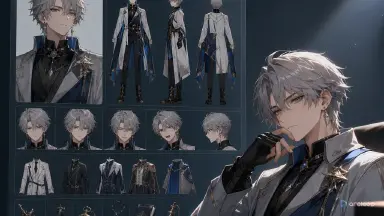
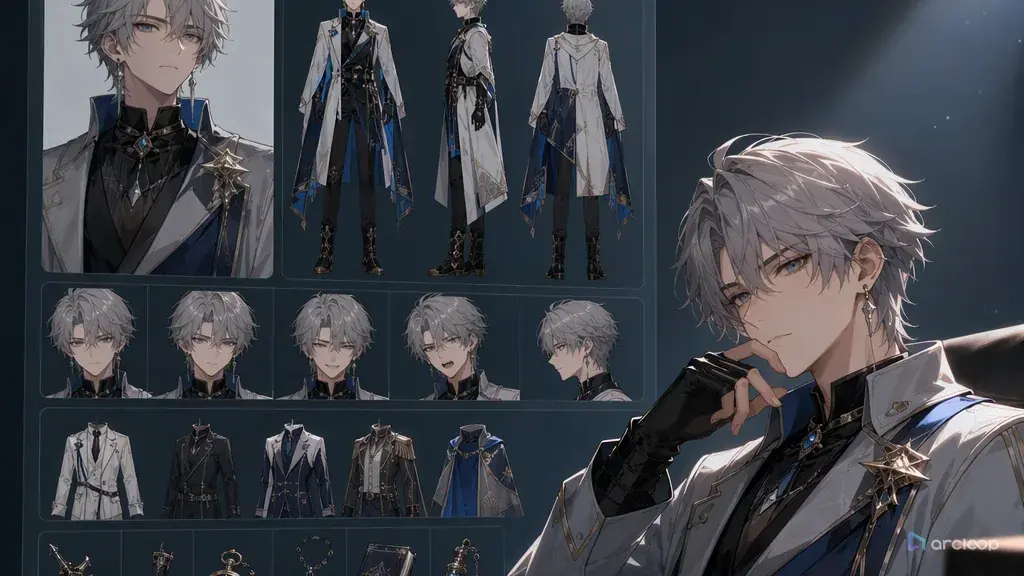
The related terms all fit into the same chain. A character profile is the smallest unit — it states the character's role and core do-not-change items. A character turnaround sheet is the front/side/back reference. A four-view turnaround adds a three-quarter angle on top of that, so a turn or half-profile stays stable. A character reference sheet compiles everything for review onto one page — reference portrait, expressions, outfit, props, and color palette. A character asset library is the reusable, long-term system that also holds voice, blocking, lighting, storyboard reference language, and monetization use.
A working asset library covers at least three layers. The first is visual identity: reference portrait, turnaround sheet, expression set, outfit, and props. The second is performance identity: line delivery, voice, emotional range, and movement habits. The third is production identity: do-not-change items, flexible items, file naming, shot reference language, and how it gets reused for monetization.
A character asset library also needs to connect to the full pipeline: concept → script → storyboard → video → voiceover → edit. Concept decides the character's function, script decides their actions, storyboard decides blocking, video generation pulls the visual assets, voiceover pulls the voice asset, and editing checks for consistency. Put together a minimal loop using the character asset template, the short drama workflow, and a voiceover template.
Step-by-step
Step one: assign a character code and a one-line role. For example: "ZH-001, Lin Zhixia, lead of the contract-revenge storyline, cold on the outside, ruthless underneath." The code keeps files organized; the one-liner keeps the character's role from drifting.
Step two: add the reference portrait. It should be the most standard front-facing version — clean background, even lighting. This isn't necessarily the best-looking image; it's the one that most accurately represents the character.
Step three: add the character turnaround sheet. Front, side, and back all need to be clear, with notes on hair silhouette, outfit structure, prop placement, and footwear.
Step four: add an expression set. AI short drama needs, at minimum: neutral, restrained, shocked, angry, a smirk, and sad. AI anime drama can add exaggerated reactions and comic-style beat pauses.
Step five: add a voice profile. Note the apparent age, pace, emotional intensity, pause habits, verbal tics, and anything off-limits. That keeps multi-character voiceover from sounding like a different person every episode, and keeps the delivery from sounding like it's reading off a page.
Step six: define blocking and relationships. Whether the lead stands foreground or background under pressure, how far apart they stand from the other lead in a shared frame, whether they make direct eye contact with the antagonist — all of it can become a storyboard rule.
Step seven: write monetization reuse fields. Which images work as cover images, which expressions suit a title card, which outfits carry across episodes, which shots are worth producing at scale. The asset library isn't a folder of favorites — it's a cost-control asset.
Copy-and-use prompt examples
Example 1: character asset library fields
Build a character asset for an AI short drama lead. Fields: character code, one-line role, reference portrait, character turnaround sheet, expression set, everyday outfit, special outfits, key props, blocking habits, line delivery tone, voiceover voice, do-not-change items, flexible items, storyboard reference language, monetization reuse points. The goal is to stop the character from changing appearance across shots or recasting mid-scene, without burning through repeated generations. Output should be production-ready and read naturally, not stiff or translated.
Example 2: from the asset library to a shot prompt
Generate a 6-second vertical AI short drama shot using character asset ZH-001. Asset references: reference portrait locks the face, turnaround sheet locks body proportions and outfit, expression set uses a smirk, voice profile uses a low, steady tone. Shot content: Lin Zhixia sets the voice recorder on the table and says, "Anything else you'd like to explain?" Blocking: she's front-right, the other character only shows their left shoulder. Keep the short black hair, cream-colored suit, silver stud earrings, and thin black belt unchanged. No redesigning the character, no changing faces between shots, no adding new characters.
Example 3: reviewing the asset library for reuse
Review whether this character asset library can support a 20-episode AI short drama. Check: is the reference portrait stable, is the turnaround sheet complete, do the expressions cover conflict scenes, does the outfit work across multiple settings, can the voice stay consistent across episodes, are blocking rules clear, are the do-not-change items actually enforceable, are monetization reuse points defined. Output the gaps, the minimum assets needed to fill them, and a priority order. The goal is lowering the cost of producing at scale.
Common failures and fixes
Failure one: the asset library turns into a pile of files. Fix: add fields and codes — every asset needs a stated purpose.
Failure two: only good-looking images, no turnaround sheet. Fix: build the turnaround sheet before generating any more video, or the character will keep changing appearance across shots.
Failure three: do-not-change items are too vague. Don't write "try to stay consistent" — write "face shape, hair silhouette, outfit cut, and key props must not change."
Failure four: voice was never added to the asset library. A short drama character is built from face and voice together — an unstable voice weakens the character's recall value for monetization.
Failure five: the asset library doesn't serve monetization. Fix: add fields for cover images, titles, compilations, reusable shots, and cost. The more standardized the asset library, the cheaper it is to produce at scale.
FAQ
How many images does a character asset library need at minimum?
For a lead character, aim for at least a reference portrait, a turnaround sheet, and 6 expressions. Characters who appear often can add outfits, props, blocking notes, and cover-image poses on top of that.
Can a character asset library be built incrementally?
Yes, but a lead character's reference portrait and turnaround sheet should be finished before you generate episode one. Anything added later shouldn't touch the core do-not-change items.
How does a character asset library connect to monetization?
A stable character is easier to carry across cliffhangers, compilation covers, character IP, and reused assets. The asset library directly affects per-episode cost and long-term production efficiency.