Introduction
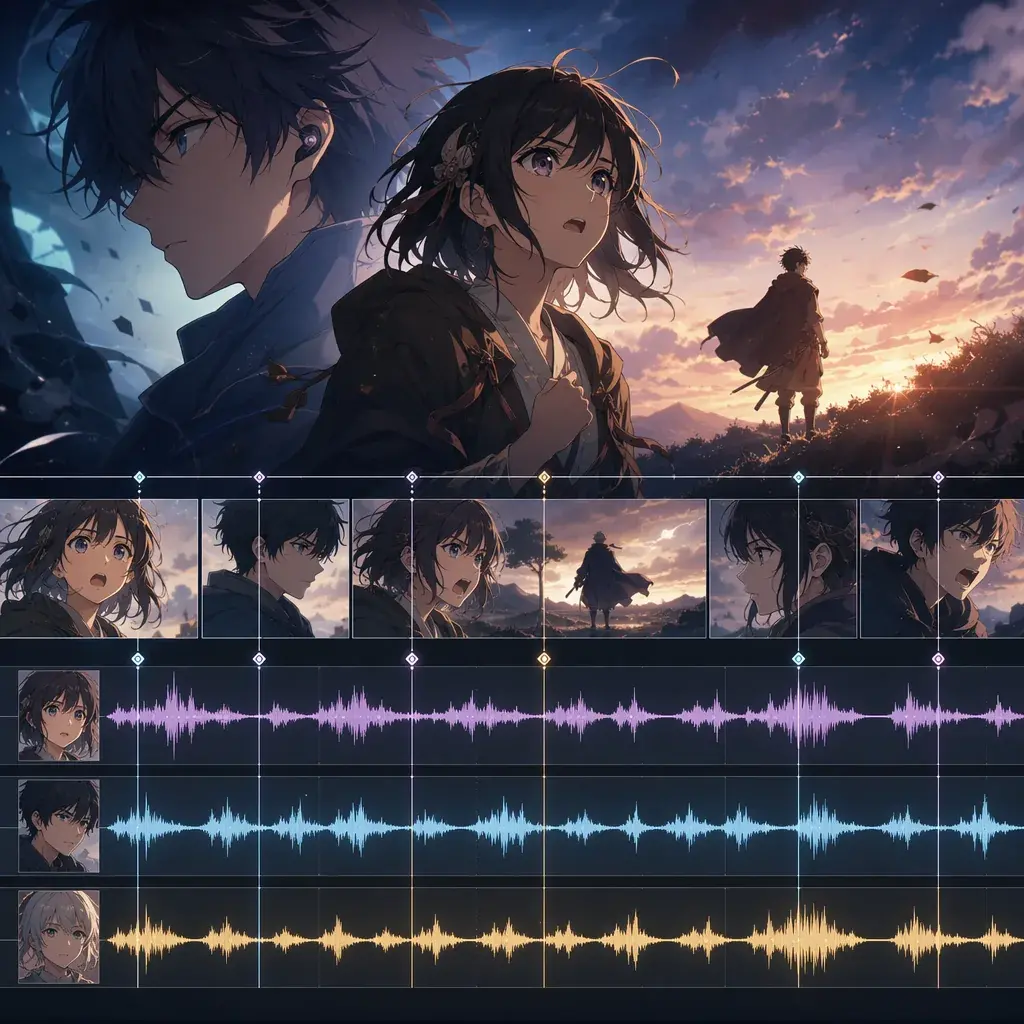
AI character voice is often added too late. A creator finishes a clip, then looks for a voice line that can sit on top of it. Sometimes that works, but it usually feels detached. The character's mouth, expression, action, and emotional pressure were not built for the line. The voice becomes a patch instead of part of the scene.
For anime storytelling, voice should be planned alongside the OC, storyboard, and shot timing. A whisper before a confession, a clipped command during a fight, a nervous laugh from a rival, or a tired narrator line can change how the viewer understands the same image. Voice is not only pitch. It is relationship, rhythm, intent, and timing.
This guide focuses on voice as a story layer. It is different from a generic voice prompt guide because it starts from scene continuity: who is speaking, who is listening, what just happened, what the character wants to hide, and how long the line has to fit. Use Character Voice Line Builder to keep those pieces in one brief.
Core Principles
The first principle is scene before sound. Do not start with "cute voice" or "deep voice." Start with what the scene means.
The second principle is relationship pressure. The same line sounds different when spoken to a friend, rival, viewer, mentor, or enemy.
The third principle is timing. A voice line must fit the shot. A 6-second close-up cannot carry a 30-second monologue without feeling rushed.
The fourth principle is reusable character profile. Keep the OC's voice habits stable across lines: pacing, confidence, formality, nervous tells, and emotional range.
The fifth principle is boundaries. Say whether the output should include music, sound effects, singing, shouting, breaths, pauses, or clean spoken dialogue only.
Step-by-Step Voice Story Workflow
Start with the storyboard beat. Write the shot purpose: reveal, refusal, apology, threat, joke, decision, or confession. This controls the delivery.
Add the character profile. Keep it short: role, emotional habit, speaking rhythm, and one contradiction. For example, "formal voice, but speaks faster when embarrassed."
Add the listener. A line with no listener often sounds generic. The listener may be on screen, off screen, or the audience.
Set the target duration. Give a range such as 6-8 seconds or 12-15 seconds. This helps pacing and edit planning.
Write the exact line separately from direction. Use labels so a human reviewer can see what is spoken.
Add performance notes. One pause, one emotional shift, and one delivery mode are usually enough. If the line belongs to a sequence, anchor it to Three-Shot Continuity Board.
Voice Inside the OC Pipeline
Voice becomes stronger when it inherits from the same OC brief as the visuals. A character sheet establishes age range, silhouette, expressions, and world. The OC profile establishes mechanism and relationships. The storyboard establishes what happens before and after the line. The voice prompt performs that moment.
This also keeps voice consistent. If every line creates a new persona, the character will drift just like a visual design can drift. Reuse a small voice card: tone, pacing, emotional tells, words they avoid, words they repeat, and how they change under pressure.
Voice can also reduce visual burden. A quiet line can explain hesitation that would be expensive to animate. A short breath can make a close-up feel intentional. A half-laughed denial can carry relationship tension better than another action beat.
Example Prompt 1: Confession Voice Beat
Voice direction: Perform as Nami, an original anime mapmaker from a floating-island city. She usually sounds practical, brisk, and guarded, but she becomes softer when someone notices she is afraid. Scene context: Nami has just covered her glowing compass pendant so her friend will not know she is lying about being fine. The listener is a trusted friend standing just off camera. Voice quality: warm young adult alto, clear spoken dialogue, restrained emotion. Pacing: start with a small defensive laugh, pause after the first sentence, then slow down and become honest. Target duration: 9 to 11 seconds. No singing, no music, no sound effects, no exaggerated parody.

Line: "I'm fine. Really. I just... need the compass to stop telling the truth before you do."
This prompt ties the line to a visual mechanism and relationship.
Example Prompt 2: Rival Banter Voice Beat
Voice direction: Perform as Ren, a brilliant academy rival who pretends every mistake was part of the plan. Scene context: his invention has just sparked in front of the protagonist, but he wants to stay impressive. Listener: a friendly rival who knows him too well. Voice quality: bright tenor, theatrical confidence, quick pacing, with one tiny crack of panic before recovering. Target duration: 7 to 9 seconds. Spoken dialogue only, clean studio voice, no music, no crowd noise, no shouting distortion.

Line: "That was not an explosion. That was a preview of the dramatic version, which I obviously chose not to finish indoors."
The voice direction gives the joke a performance arc instead of relying on text alone.
Example Prompt 3: Trailer Narration Layer
Voice direction: Create a calm anime trailer narration for a recurring fantasy short. Narrator is the main OC as an older version of herself, speaking from after the events of the story. Voice quality: low, gentle, reflective, with controlled sadness and a faint smile at the end. Scene context: the trailer shows a cracked lantern lighting an empty market alley, then a young witch stepping into the dark. Pacing: slow, cinematic, leave a short pause before the final sentence. Target duration: 13 to 15 seconds. Spoken narration only, no music, no sound effects, no echo-heavy fantasy filter.

Line: "Everyone thought the moon had vanished. I was the only one foolish enough to answer when it called from below the city."
This line helps turn a visual hook into a story premise.
Common Mistakes
The biggest mistake is prompting voice type without scene context. Pitch and age range do not explain the performance.
Another mistake is making the line too long for the shot. If the character has only a close-up reaction, the line should breathe.
Creators also change the voice profile every time. Keep the character's rhythm and emotional habits stable across scenes.
A fourth mistake is adding music or sound effects when the editor needs a clean voice asset. If the line is for production, keep it dry unless the sound layer is requested.
Finally, do not make every line dramatic. Anime scenes often work because small voice choices carry pressure.
FAQ
When should I write the voice prompt?
Write it after the storyboard beat is clear and before final edit timing is locked. That lets the voice influence pacing instead of being squeezed in later.
What should stay consistent across voice lines?
Keep the character's voice quality, pacing habits, formality, emotional tells, and relationship patterns stable. Change the scene context and emotional target.
How does voice help AI anime shorts?
Voice gives the viewer intent. It can clarify a decision, reveal hidden emotion, support a hook, or make a recurring OC feel more alive across scenes.