Introduction: When the Scene Looks Flat Even With Pretty Colors
You write a promising anime scene: a lighthouse intern finds a forbidden map in a storage room, wind pushes the curtains, and the camera moves toward her hand. The draft has all the objects, but nothing has weight. Her face, the map, the shelves, and the window glow with the same brightness. It looks decorated, not directed.
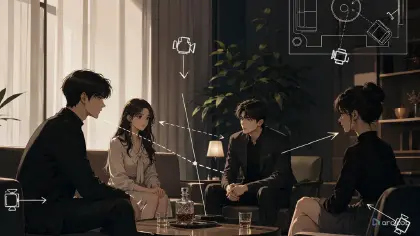
Light and shadow prompts fix that by giving the scene a visible rule. Instead of piling on "cinematic, dramatic, beautiful lighting," you decide where the key light comes from, what falls into shadow, where the rim light separates the silhouette, what color bounces from the environment, and which object should catch the viewer's eye first. In anime production, lighting is not only polish. It controls mood, depth, character focus, and the continuity between shots.
Use this guide when a shot feels flat, muddy, overexposed, randomly neon, or hard to read at mobile size. It shows how to describe light direction, cast shadows, reflected color, silhouette edges, and final-frame focus inside ArcLoop. Start with Style Pack Templates for a visual starting point, or test depth logic with Cyberpunk Walk Depth Layers.
The goal is not to write a physics textbook. The goal is to make the light useful enough that the draft can be reviewed: where does it come from, what does it reveal, what does it hide, and what should remain stable in the next shot?
Core Principles for Light and Shadow Prompts
Choose one dominant light source. A desk lamp, vending machine, sunset window, emergency flare, moon through blinds, phone screen, or furnace door gives the shot a reason for brightness. If every object emits a different glow, the scene loses hierarchy.
Separate mood from mechanics. "Lonely" is a mood. "Cool blue window light crossing half her face" is a lighting instruction.
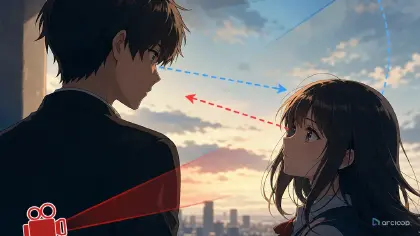
Use shadows to stage the action. A cast shadow can point toward a clue, hide a character's expression, stretch across a floor, or divide two characters in a confrontation. Shadows are not just absence. They are composition tools.
Protect the silhouette edge with rim light, backlight, or clean value contrast so hair, shoulders, hands, and props do not dissolve into the background.
Let reflected color belong to the environment. Wet asphalt throws blue and red light upward. Tatami reflects warm green-brown softness. Snow bounces pale light into the face. A monitor paints cool light on glasses. These details make a world feel coherent.
Keep continuity across a sequence. If the previous shot placed the sunset on screen left, the next shot should not suddenly light the same character from screen right unless the camera has moved. Light direction is shot-level information, the same as blocking — write it straight into each shot's description, in ArcLoop's shot card, not into the character asset.
Step-by-Step Light and Shadow Prompt Structure
Start with the story beat: the hidden map, the character's hesitation, the rival in the doorway, the hand reaching for the switch, or the final expression. Lighting should support that priority.
Name the key light in plain words: single warm desk lamp from lower left, hard white skylight, cool moonlight through blinds, or red alarm light from the corridor. Add shadow behavior: soft, hard, long, broken by window frames, cast by leaves, or pooled under furniture.
Define fill or bounce only when the shadow side needs detail. Snow, water, floor tiles, city signs, and paper walls all reflect different colors. If the shot should feel harsh, say the shadow side stays mostly unfilled.
Set the silhouette edge with rim light, backlight, doorway glow, reflected hair edge, or pale shoulder outline. Then name the brightest object and what must not bloom out. Record light direction, time of day, and color rule in the ArcLoop shot card.
Where Lighting Lives: Shot Card, Not Character Asset
Treat lighting as one layer of the production board, not a late adjective. The lighting note answers four things: primary source, shadow pattern, reflected color, and focal point.
Generate a rough draft first. If composition, character, and action work but the shot is flat, use a narrow light pass: "keep everything, change only key light, cast shadow, rim edge, and reflected color." For reusable worlds, store recurring light rules so later shots feel like the same IP.
When you need a starting point, open Style Pack Templates, choose the nearest light family, then write your own scene-specific rule inside ArcLoop Worlds. Keep that rule about light behavior only — it shouldn't rewrite the story beat.
Example Prompt 1: Lantern Archive Discovery
Create a 7-second 2D anime shot of an original apprentice archivist named Senri. She has ash-brown bobbed hair, oval glasses, a moss-green cardigan, a cream pleated skirt, and a thin red bookmark tied around her wrist. Setting: a narrow underground archive under an old museum, with stacked wooden drawers, dust, and one brass lantern on the floor. Camera: medium shot from shelf height, slow push-in, Senri framed slightly right of center.

Main action: Senri kneels, opens a low drawer, and finds a folded map that catches the lantern light. Lighting rule: the brass lantern is the only key light, warm and low from screen left. It lights her hands, the map edge, and the lower half of her face while her hair and shoulders fall into soft upper shadow. Cast shadows from drawer handles stretch diagonally across the floor toward camera. A faint green bounce from old cabinet paint touches the shadow side of her cardigan. Add a thin rim edge along her glasses from reflected lantern light.

Style: clean cel-shaded anime, painted archive background, soft dust motes visible only near the lantern beam. Keep Senri's glasses, cardigan, bookmark, and kneeling pose consistent. The map is the brightest object after the lantern. No random neon light, no overexposed face, no flat front lighting, no text, no logo, no photorealism.
This prompt gives the shot one light source and a clear focal hierarchy.
Example Prompt 2: Greenhouse Storm Backlight
Generate an 8-second 2D anime scene featuring an original rooftop botanist named Halka. She has long black hair braided over one shoulder, a mustard raincoat, round amber earrings, and muddy work boots. Setting: a glass greenhouse on top of a city school during a late-afternoon storm. Camera: wide interior shot looking toward the glass wall, locked camera, Halka full body visible among planters.

Main action: Halka notices a cracked seed pod glowing under a bench, steps closer, and shields it from dripping water with one hand. Lighting method: storm daylight is a cool gray backlight through the glass wall, outlining her raincoat hood and braid. The glowing seed pod is a small warm fill light from below, touching her hand and chin but not lighting the whole room. Large leaf shadows move slowly across the floor. Wet glass catches pale highlights, and puddles reflect a muted yellow from the raincoat.

Animation details: rain trails down the greenhouse panels, leaves tremble, one drop falls into a bucket. Preserve Halka's braid, raincoat, earrings, boots, and careful body language. Keep the seed pod glow small and readable. No full-room magical bloom, no random sunset, no face lost in darkness, no extra characters, no text, no watermark, no 3D render.
The scene uses backlight and reflected color without making everything glow.
Example Prompt 3: Ferry Deck Shadow Revision
ArcLoop lighting revision pass for the selected take. Keep the approved character, ferry deck, camera, and action. Character: Dalen, an original teen deckhand with copper skin, short teal hair, a white canvas jacket, navy shorts, and a yellow rope bracelet. Setting: an early morning harbor ferry, empty passenger deck, fog over the water. Current issue: the shot is flat, the face and background have the same brightness, and the rope bracelet does not read.

Create a polished 6-second 2D anime clip. Main action: Dalen ties a rope knot to the rail, pauses, and looks toward a foghorn off screen. Camera: waist-up side view, stable, hands and rope visible. Light change only: pale sunrise key light comes from screen right through fog, making a soft bright edge on his teal hair, cheek, jacket sleeve, and rope bracelet. The left side of his face stays in gentle cool shadow. Cast shadows from the rail fall across the white jacket in thin horizontal bands. The wet deck reflects a dim peach tone under his hands.

Keep his face, hair, jacket, bracelet, ferry rail, knot action, and camera path. Do not change costume, weather, or setting. No harsh noon light, no neon colors, no overexposed fog, no flat front light, no text, no logo, no extra fingers.
This revision prompt does not restart the whole idea. It repairs light direction, shadow shape, and focal contrast.
Common Mistakes in Light and Shadow Descriptions
The first mistake is stacking lighting adjectives that contradict each other. Pick the visible source and let the mood follow.
The second mistake is forgetting the brightest object. If the eye has nowhere to land, the scene feels flat even when the colors are attractive. Name the focal object and keep secondary lights weaker.
The third mistake is using rim light everywhere. Rim light is useful when the silhouette needs separation, but a glowing outline around every object can make the frame look synthetic. Choose the character edge or key prop.
The fourth mistake is changing light direction between shots without a story reason. Track screen direction, window position, and time of day.
The fifth mistake is asking polish to fix staging. Better shadows cannot save an unreadable action. Confirm pose, camera, and focal point first, then refine light.
Finally, do not treat darkness as detail loss. A shadow area can keep shape through value contrast, reflected color, and clean silhouettes. Black mud is not atmosphere.
FAQ: Light and Shadow Prompting
How specific should an anime lighting prompt be?
Specific enough to review. Name the key light source, direction, shadow type, reflected color, and focal object. You usually do not need technical lighting jargon if the visible behavior is clear.
Should I use "cinematic lighting" in prompts?
It can be a supporting style phrase, but it should not be the whole instruction. Replace it with concrete choices such as low lantern light, window-frame cast shadows, cool backlight, warm bounce, or a rim edge on the hair.
How do I make night scenes readable?
Give the character a silhouette edge, a motivated small light source, and controlled shadow detail. Use signs, windows, moonlight, streetlamps, or reflected water as sources instead of raising the whole scene brightness.
How does ArcLoop help with lighting continuity?
ArcLoop keeps light direction, color rule, and shadow behavior written into the shot card itself, right alongside the shot description. You reuse the approved version by copying it into the next shot instead of re-planning the scene elsewhere and importing guesses later.
When should I run a lighting revision pass?
Run it after identity, camera, and action already work. The revision should keep approved layers still and change only key light, cast shadow, rim edge, reflected color, exposure, or focal hierarchy.