Introduction: Antagonists Who Change the Hero's Choices
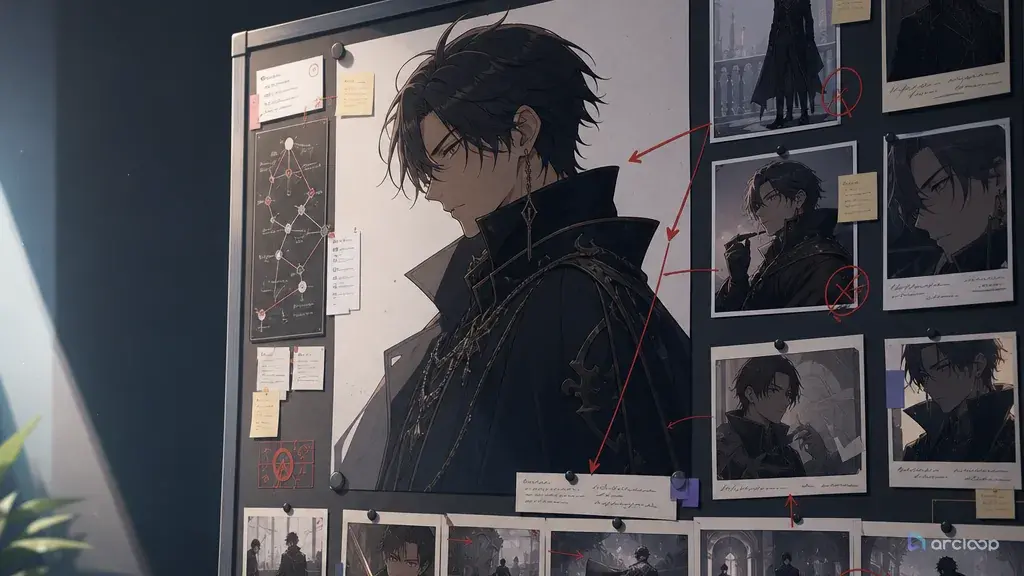
The easiest AI anime villain to generate is also the easiest one to forget: black coat, sharp smile, dramatic backlight, maybe a throne. The shot looks expensive. Then the story starts and the villain could be replaced by any other threatening person without changing the hero's decision. That is not antagonist design. That is costume design wearing a scowl.
An antagonist needs a function before they need a silhouette. They pressure the hero's weakness, protect a belief the story wants to challenge, enforce a rule the hero cannot accept, or pursue a desire that makes the hero choose. If the antagonist does not force a choice, the generated shots may still look cool but the scene has no engine.
Antagonist work touches several parts of the project at once, so it's worth building the villain as a character asset from the start, not a one-off prompt. Use Character Sheet Templates to lock the visible identity, Character Sheet First to keep the design reusable across shots, and AI Character Voice Is a Story Layer when the antagonist's delivery needs to reveal power without overacting.
This guide builds an antagonist function card for AI anime stories. The card names what the antagonist embodies, how that pressures the protagonist, which visual anchors must persist, and what each generated scene must prove.
Core Principles for AI Anime Antagonist Design
Start with the wound they press. A rival who beats the hero in combat is less interesting than a rival who exposes the hero's need to be admired. A monarch who controls the city matters more when the hero depends on the very order the monarch protects.
Give the antagonist a value, not just a goal. "Wants the artifact" is plot movement. "Believes memory should be edited so people stop grieving" is an antagonist value. Values create repeatable behavior across scenes.
Design visual authority around the function. A bureaucratic antagonist may be terrifying through perfect posture, clean gloves, and stamped documents. A reckless antagonist may use asymmetry, loose straps, and impatient gestures. The outfit should tell the same story as the pressure they create.
Make the antagonist capable of being right about something. Flat evil becomes predictable. If the antagonist's argument has a painful truth, the hero must answer it instead of only defeating it.
Keep menace performable. Constant shouting, glowing eyes, and huge effects can make every scene peak too early. Small control often reads stronger: a quiet correction, a delayed blink, a hand placed over the hero's exit.
Link the antagonist to the world rule. In anime shorts, screen time is limited. The antagonist should reveal how the world works: academy rankings, guild debt, memory laws, shrine taboos, city rationing, or family inheritance. That makes every appearance carry exposition without a lecture.
Step-by-Step Antagonist Design Workflow
Write the protagonist's current comfort first. What habit lets the hero avoid growth? Maybe they apologize too quickly, refuse help, hide talent, chase applause, or treat rules as someone else's problem. The antagonist should make that habit fail.
Name the antagonist function in one sentence. Use a sentence like, "Director Veyra embodies a world where safety is purchased by deleting dangerous memories." This is clearer than "elegant villain woman."
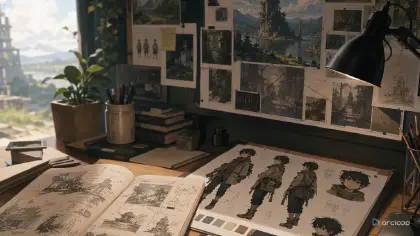
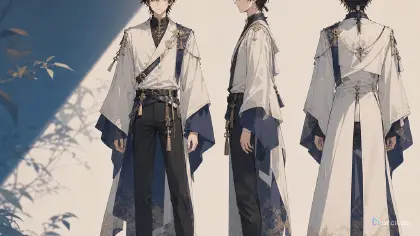
Build the visible character asset. Include age range, silhouette, face shape, hairstyle, color palette, costume anchors, signature prop, posture, and expression habits. Keep it original and avoid copied franchise cues or protected logos.
Define the pressure scenes. List three situations where the antagonist changes the hero's choice: first encounter, private offer, public consequence. Each scene should test a different part of the hero.
Plan the performance layer. Voice, gesture, and timing should match the antagonist's power. A character who controls law may speak in calm corrections. A character who lives by hunger may interrupt, lean in, and speak too close. Keep the behavior consistent.
Generate a small slate from the function card. Do not approve the shot only because the antagonist looks attractive. Ask whether the hero's problem becomes sharper when the antagonist appears.
Save rejection rules. Reject designs that look threatening but do not reveal the value, fear, desire, or rule. Reject shots where the antagonist changes personality just to make the scene louder.
Build the Antagonist as a Character Asset, Function Included
Build the antagonist the same way you build the hero: as a character asset in My Assets, in the same project as the world rules they enforce. Write the function — what they embody, whose weakness they pressure — into the asset's description field instead of a one-off poster prompt, so every shot that references them with @ carries that function along.
Start with Character Sheet Templates, then write into the description: the value they embody, the hero's weakness they pressure, the first visible sign of their power, and what they must never do out of character. If the story relies on a setting rule, attach it in ArcLoop Worlds. If the antagonist needs a recurring speech style, set it as the character asset's voice instead of planning it separately.
For production, use Continuity Check Board to compare antagonist shots across episodes. Review in this order: function, identity, relationship to hero, readable action, then polish. A gorgeous shadow pose fails if it does not sharpen the protagonist's choice.
Complex antagonist scenes — public speeches, crowd reactions, elaborate powers, costume motion — take more shots and more retries than a quiet confrontation. Plan for that in the storyboard before generating finals, so the expensive scenes are the ones you're sure about.
Example prompt 1: Antagonist Function Card for Director Veyra
Create a character asset for an original 2D anime story called "The Archive That Forgot Summer."

Antagonist: Director Veyra Lume, keeper of a city archive where painful memories are sealed into glass index cards.
Function: she embodies the belief that grief should be edited for public safety, pressuring the heroine who wants people to remember the truth even when it hurts.
Visible anchors: tall narrow silhouette, silver-gray hair folded into a precise loop, pale violet eyes, white archivist coat with black cuffs, translucent gloves, glass index-card case at her waist.
Behavior anchors: never raises her voice, corrects people's names before threatening them, touches memory cards with two fingers, smiles only when someone chooses comfort over truth.
Hero pressure: she offers the heroine a legal way to erase one unbearable memory in exchange for surrendering a forbidden archive key.
Reject rules: no monster form, no copied symbols, no random armor, no glowing rage, no chaotic hairstyle, no sympathy tears in first appearance.
This prompt makes the antagonist's threat specific. Her design, behavior, and story function all point at controlled forgetting.
Example prompt 2: First Confrontation Shot
Generate an 8-second 2D anime confrontation shot using Director Veyra's antagonist function card.

Scene: inside a circular memory archive at noon, thousands of glass index cards hang from thin brass rails. Heroine: Tamsin Roe, a young courier-scholar with warm brown skin, cropped black curls, a green satchel, and a forbidden archive key tied to a red cord around her wrist.
Action: Veyra steps between Tamsin and the exit without rushing, lifts one glass card containing a flicker of summer light, and calmly places it over Tamsin's reflection on the polished floor.
Camera: medium wide shot from low angle, both characters visible, Veyra centered and still, Tamsin half-turned with one hand protecting the key.
Style: clean 2D anime line art, bright archive light, soft reflections on glass cards, restrained movement, quiet tension.
Story goal: show that Veyra's power is legal control over memory, not physical violence.
Negative constraints: no shouting, no battle effects, no extra guards, no text overlay, no logo, no face drift, no copied insignia, no random weapon.
The antagonist pressures the hero through a choice: surrender the key or risk a memory being sealed.
Example prompt 3: Controlled Revision for Antagonist Clarity
Revise selected take AV-04 for Director Veyra's first confrontation.

Approved: Veyra's white archivist coat, silver-gray looped hair, glass card case, Tamsin's green satchel, red wrist cord, circular archive setting, medium wide camera.
Problem: Veyra currently looks mysterious but the memory-control function is unclear. The glass card reads like decoration instead of power.
Single change: make the lifted glass card project a small summer-memory reflection onto the floor over Tamsin's shadow, while Veyra keeps her calm posture.
Do not change: character designs, camera angle, archive layout, lighting direction, duration, or Tamsin's protective hand gesture.
Approval test: viewer should understand that Veyra controls memory records and that Tamsin is being pressured to choose truth over comfort.
Negative constraints: no monster transformation, no combat blast, no extra character, no text, no logo, no random tears, no off-model face.
The revision repairs the antagonist's function without redesigning the scene.
Common Mistakes in AI Anime Antagonist Design
The biggest mistake is starting with menace words instead of conflict. Dark, evil, powerful, cruel, and mysterious do not tell the story what the antagonist changes.
Another mistake is giving the antagonist a costume unrelated to their power. If they control contracts, records, songs, weather, or academy rank, the design should show that system.
Creators also make every antagonist scene louder than the last. Volume is not escalation. A quieter offer can be more dangerous than a battle pose if it corners the hero's values.
A fourth mistake is letting the antagonist change personality to fit each prompt. If they are patient in one shot and impulsive in the next, the audience loses the pattern they are meant to fear.
Finally, do not make the antagonist only a final boss. Let them reshape ordinary scenes: forms that cannot be signed, doors that stop opening, friends who repeat their language, rules the hero starts to believe.
FAQ: Antagonist Design for AI Anime Stories
What should be on an antagonist function card?
Include the value or rule the antagonist embodies, the hero weakness they pressure, visible identity anchors, behavior anchors, signature prop, scene tests, and reject rules.
Does every antagonist need a tragic backstory?
No. They need a coherent function. A short, sharp belief that pressures the hero is often more useful than pages of backstory that never appears on screen.
How do I make an antagonist visually original?
Start from their job in the world and their method of control. Build silhouette, costume materials, props, posture, and color around that function instead of borrowing a generic villain outfit.
How does ArcLoop help antagonist continuity?
The antagonist lives as one character asset alongside the hero's, in the same project as the world rules. Every shot references it with @, so identity doesn't drift between episodes — and because the function is written into the asset's description, you can check any new shot against it directly.
When should I redesign the antagonist?
Redesign when the character looks striking but does not pressure the hero, reveal the world rule, or behave consistently across scenes. If only a prop, gesture, or camera read is unclear, revise that layer instead.