Introduction to Anime OP and ED Title Prompts
An anime opening can fail by looking stylish but saying nothing about the show. An ending can fail in the opposite direction: it looks calm, but leaves no emotional aftertaste. In both cases, the problem is usually not polish. The prompt forgot the sequence job. The OP should make the viewer understand the cast, world rule, central conflict, and recurring motif. The ED should let the episode breathe through quiet movement, object memory, empty rooms, and a final still that feels like someone lived there.
Opening and ending title prompts need different energy, but they share one workflow. You need character sheets, a motif, shot cards, rhythm notes, and a review pass that checks whether the sequence still belongs to the same series. If you only ask for "anime opening with cool characters" or "sad anime ending at sunset," the result may generate attractive clips that cannot support a title sequence.
This merged guide covers both search intents: anime OP opening prompts and anime ED ending prompts. It shows how to design title sequences that work as story signals, not random montage material. For a practical starting point, use 2D Animation AI Templates, then build cast and sequence planning inside ArcLoop Worlds.
Core Principles for Anime Opening and Ending Titles
The first principle is to separate promise from aftertaste. The opening asks, "What kind of story is this, and why should I follow it?" The ending asks, "What feeling remains after the episode?" OP prompts need cast flashes, conflict images, rhythm cuts, and a hero frame. ED prompts need quiet walks, object close-ups, empty rooms, sunset color, and a final still.
The second principle is one motif across both sequences. A broken compass, blue envelope, paper crane, red staircase light, or glass seed can appear in the OP as mystery and in the ED as memory. This makes the title set feel designed.
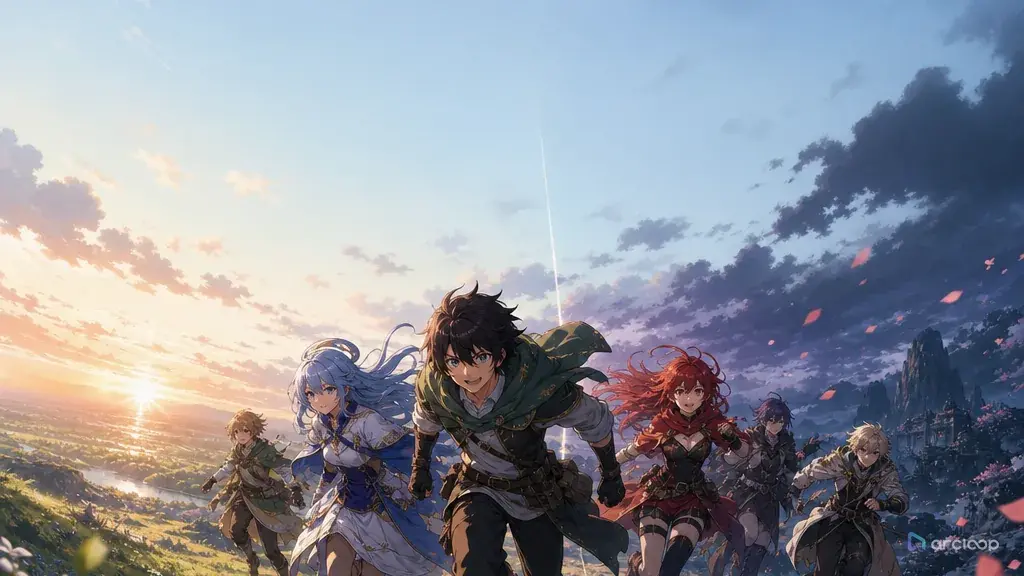
The third principle is cast readability. Opening flashes should identify role, not just faces. The rival can be seen closing a gate. The healer can be seen tying a bandage. The lead can be seen choosing a dangerous path. One action per cast flash is enough.
The fourth principle is restraint in the ending. ED clips often work because they avoid explaining everything. A character walking home alone, a cup left on a windowsill, or an empty club room can say more than another fight shot.
The fifth principle is rhythm without fake title text. Unless you are adding real typography later, do not ask the generation prompt to create logos, credits, or readable words. Use logo-free hero frames and clean negative space instead.
The sixth principle is continuity between energy levels. The OP can be bright and fast while the ED is slow and warm, but both should preserve the same character designs, world rules, motif, and palette logic.
Step-by-Step Anime OP and ED Prompt Method
Start with the series premise in one line. This is not lore. It is a production anchor: "Three students maintain a forgotten observatory that predicts disasters through constellations no one else can see." Every title shot should relate to that promise.
Choose the shared motif. Pick an object, color, gesture, or place that can survive both OP and ED treatment. The motif should be visible enough for the audience to remember.
Map the OP beats. Use four to six compact beats: opening image, cast flashes, world rule, danger flash, rhythm cut, logo-free hero frame. Each beat gets its own shot card if you need clean generation.
Map the ED beats. Use four to six quieter beats: empty place, character walk, object close-up, private gesture, sunset or night color, final still. The ED should not repeat the OP at lower volume; it should show what the story costs the characters.
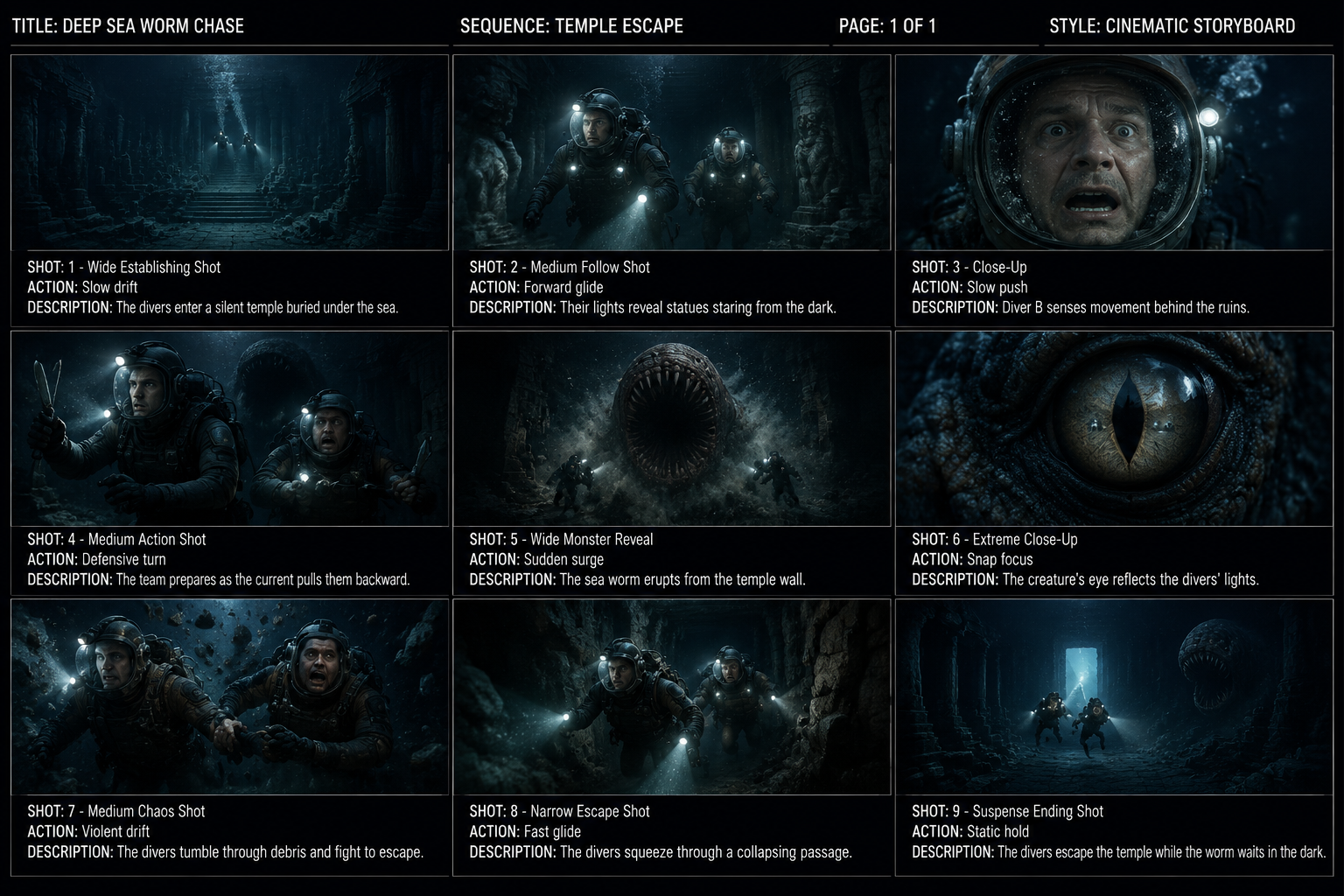
Write each prompt as a shot, not a whole sequence. A single prompt can define a short title beat, while the storyboard holds the sequence order. If you ask one generation to make a full opening or ending, it will often invent cuts you cannot control.
Define camera and rhythm. OP shots can use snap cuts, side tracks, fast push-ins, silhouette reveals, and bold key poses. ED shots often need locked cameras, slow pans, long holds, and soft environmental motion.
Finish with boundaries. Preserve character sheet identity, keep the motif visible, avoid random new cast, avoid text, avoid fake logos, avoid style drift, and reject shots that do not support the series promise or emotional aftertaste.
Build Anime Title Sequences Inside ArcLoop
ArcLoop is useful here because title sequences are continuity problems. The OP and ED should use the same character assets and palette even when their moods differ. Start by building the cast and motif in ArcLoop Worlds, then convert your title plan into shot cards in the episode's Storyboard.
For an opening, Three-Shot Continuity Board can test the promise quickly: one image for the world rule, one for cast pressure, one for the hero frame. If those three do not feel like a show, a longer OP will not fix it.
For an ending, the same board can test emotional memory: one empty room, one character walk, one object close-up or final still. You can also adapt a quiet one-beat template from 2D Animation AI Templates when you need slow motion instead of title montage energy.
Keep rough passes cheap. Review each draft against a short checklist: does this shot reveal a role, repeat the motif, fit the correct OP or ED energy, and preserve the character sheet? If yes, polish. If not, fix the shot card or reference, not the entire sequence.
Example Prompt 1: Observatory OP Cast Flash
Create a 6-second 2D anime OP opening title beat for an original series about students who run a disaster-predicting observatory. Shared motif: a glass star seed. Shot purpose: cast flash and world promise, no title text. Character: Lio, the impatient telescope mechanic with copper hair, blue work vest, square goggles pushed onto his head, and oil on one glove. Setting: rotating observatory roof at sunrise, brass telescope rings, star charts pinned under glass. Action: Lio slams a lever down, the telescope shutters open, and a tiny glass star seed glows inside the lens. Camera: fast side track into a medium hero pose, then a one-second hold. Style: crisp 2D anime OP energy, bold cel shading, orange sunrise rim light, readable mechanical shapes. Keep Lio's goggles, vest, glove, and face consistent. No text, no logo, no random cast, no extra limbs, no fake credits, no photorealism.
This OP beat sells a role and a world rule in one action. It leaves clean space for real title design later instead of asking the model to invent typography.
Example Prompt 2: Observatory ED Object Close-Up
Generate an 8-second 2D anime ED ending title beat from the same observatory series. Shared motif: the glass star seed, now quiet after the episode. Setting: empty dormitory desk at late sunset, folded repair gloves, a chipped mug, and a window showing the observatory roof far away. No character on screen at first. Main action: the glass star seed rests beside the gloves, flickers once, rolls gently against the mug, then becomes still as orange light fades across the desk. Camera: locked close-up, slow focus shift from the gloves to the star seed, no cuts. Style: soft 2D anime ending sequence, warm sunset color, delicate dust, calm aftertaste. Keep the object simple and recognizable. No text, no logo, no hands entering frame, no dramatic magic burst, no new props crowding the desk, no photorealism.
This ED prompt absorbs the ending-specific angle: object memory, empty room, sunset color, and a final still. It should feel like the episode has ended, not like the next battle is starting.
Example Prompt 3: Opening-to-Ending Motif Pair
Shot descriptions for an OP/ED pair, assuming the character asset @Vessa (short black hair, cream courier jacket) is already built in My Assets. Series premise: four runaway cartographers map invisible roads across a city that rearranges at midnight. Shared motif: a red paper route tag tied to a bicycle handle.
Shot 1 (OP beat): @Vessa races across an impossible stair bridge, red route tag swinging on her bicycle, as streetlights switch on in rhythm. Fast push-in, bold silhouette, no text.
Shot 2 (ED beat): The same bicycle leans alone outside a closed noodle stand after midnight. The red route tag moves in a small breeze. Locked camera, blue-and-amber quiet color, final still.
Keep the bicycle and route tag shape consistent across both shots. No fake logo, no credits, no extra cast, no photorealism, no clutter that hides the red tag.
This prompt plans both title directions at once. The OP turns the motif into motion; the ED turns the same motif into memory.
Common Mistakes in Anime Opening and Ending Prompts
The first mistake is making an OP out of random stylish clips. If the opening does not reveal cast roles, world rules, danger, and motif, it is only a montage.
The second mistake is making an ED too empty. Quiet does not mean blank. Give the ending a walk, object, room, color shift, or final still that carries memory from the episode.
The third mistake is asking for generated title text or fake credits. Keep the frame logo-free unless you are adding real typography in a controlled design step.
The fourth mistake is changing the motif between OP and ED. A repeated object or gesture is what makes the title pair feel like one series.
The final mistake is trying to generate the full title sequence in one prompt. Build shot cards, approve rough beats, then polish only the shots that already carry the correct job.
FAQ
What is the difference between an anime OP and ED prompt?
An OP prompt should promise the series through cast flashes, world rules, motifs, rhythm cuts, danger images, and a hero frame. An ED prompt should leave emotional aftertaste through quiet walks, object close-ups, empty spaces, softer color, and a final still.
Can one prompt cover both anime opening and ending title ideas?
Yes, for planning. Use one shared premise and motif, then split the execution into OP and ED shot cards. The OP uses motion and promise; the ED uses memory and restraint.
Should I include title text in the generated prompt?
Usually no. Ask for logo-free hero frames or clean negative space, then add real title design separately. Generated fake text often looks broken and can make the shot harder to use.
How many shots should an anime opening or ending have?
For drafting, start with three to six beats. That is enough to test the sequence logic before building a longer title. In ArcLoop, turn those beats into shot cards inside the episode's Storyboard so you can revise them one at a time.
How do I keep the OP and ED visually connected?
Yes. Build the cast once as character assets in My Assets, then reference the same assets with @ in both the OP and ED shot cards. Reusing the same identity and motif across both sequences is what makes them read as one series even while doing different jobs.