

Introduction: Suspense Setup Without Empty Fog
You have a beautiful anime short: a silent hallway, a nervous character, blue light under a locked door. The first draft feels promising. Then you add the reveal, and the story falls apart. The door changes location, the key object vanishes, the character reacts like they already know the answer, and viewers are left with a vague mood instead of suspense. That is not a rendering problem. It is a setup problem.
Suspense in AI anime storytelling needs a visible information plan. Viewers should know one thing, suspect another, and wait for a missing piece. Foreshadowing adds a promise: an object, gesture, color, line, sound cue, or camera angle appears early and returns later with meaning. Payoff is the return. If the return is too hidden, nobody notices it. If it is too obvious, there is no tension.
Use this guide when planning mystery openings, supernatural hints, thriller shorts, school secrets, character betrayals, and reveal scenes. Build the clue itself as a prop asset in My Assets — a key, a mark, a color — and pull it into both the setup shot and the payoff shot with the same @ reference, so it reads as the same object twice instead of two similar-looking props. Start from ArcLoop Worlds, then use Storyboard Continuity when the clue must survive across multiple shots.
Core Principles for Suspense, Foreshadowing, and Payoff
The first principle is information contrast. Suspense is not simply hiding everything. A viewer needs enough visible evidence to form a question: why is the glass cracked, why does the mentor avoid the west stair, why does the music box stop when the moon symbol appears? Decide what the audience knows, what the character knows, and what nobody knows yet.
The second principle is a returnable clue. Foreshadowing works best when the clue can return on screen without a speech explaining it. A scratched compass, reversed glove, missing shadow, bent hairpin, or repeated camera angle can come back visually. A lore sentence may work in a script, but it is harder to pay off inside a five-second anime shot.
The third principle is stable prop identity. If the setup uses a brass cicada key, the payoff cannot become a gold beetle pendant unless the change is the story. Name the shape, material, color, scale, and owner of the clue. Treat that clue like a character anchor.
The fourth principle is viewpoint discipline. Suspense breaks when the camera reveals too much too early or hides so much that the action becomes unreadable. Pick a viewpoint rule: stay with the protagonist, let the audience see one clue the protagonist misses, or cut to the watcher only after the setup has been planted.
The fifth principle is payoff with new meaning. A payoff is not a repeated image. It is a repeated image that changes the viewer's understanding. The cracked glass was not damage; it marked the room that moved. The harmless bell was not atmosphere; it rang only when the false guide lied.
The sixth principle is mobile readability. Many anime shorts are watched small. If the clue is essential, make it visible in silhouette, color, motion, or framing. Tiny symbols in a busy background are decoration, not story evidence.
Step-by-Step Suspense Setup and Payoff Workflow
Start with the failure sentence. Write the exact way the scene could fail: "viewers do not notice the clue," "the reveal feels random," or "the mystery is only dark lighting." This line becomes the review target.
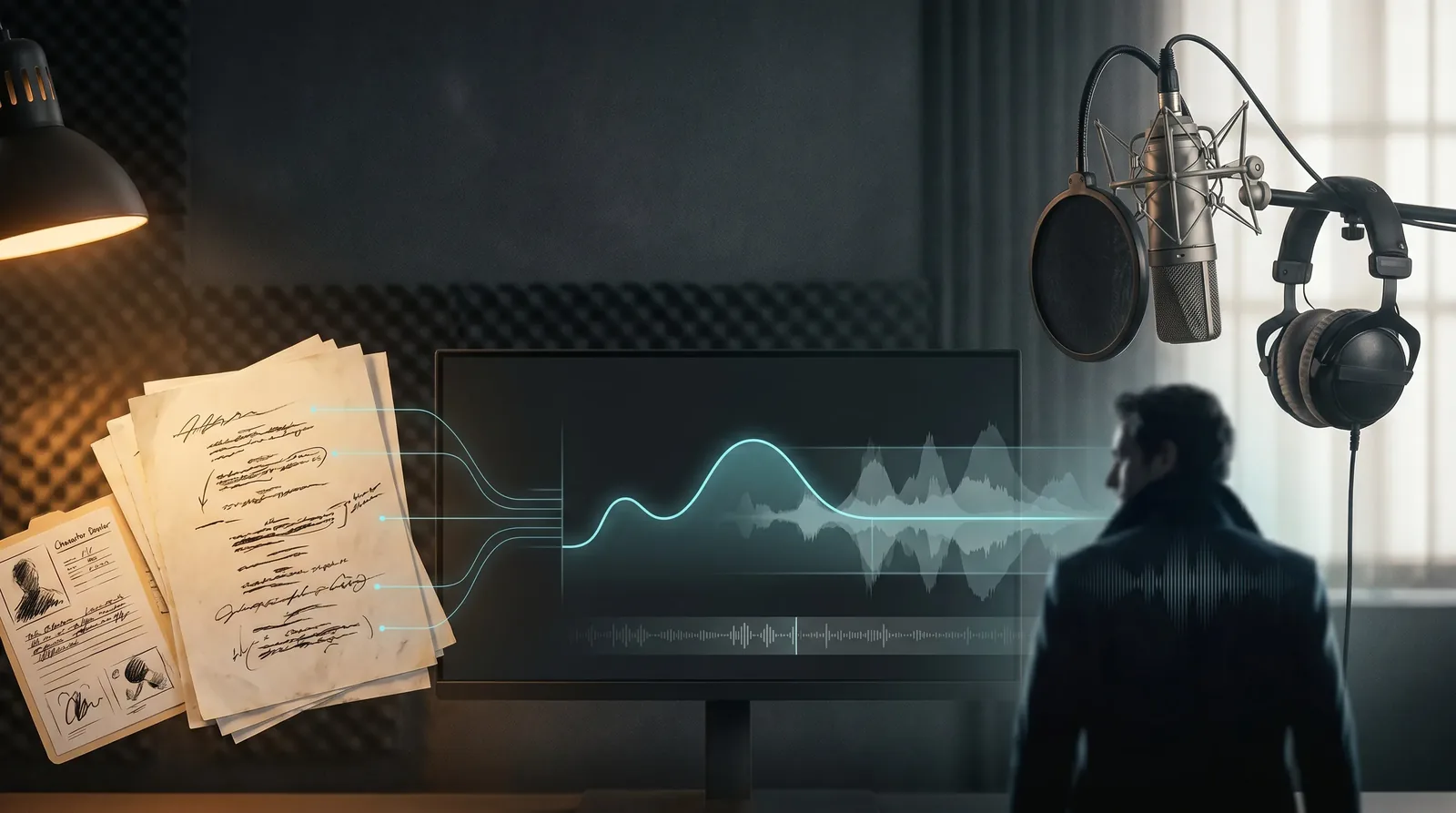
Track your clues before generating final shots. Note five things for each one: setup shot, clue form, who notices it, false interpretation, and payoff shot. Keep the list short. One strong clue beats six weak clues that fight for attention.
Lock the continuity anchors. For the character, list face shape, hairstyle, outfit, emotional mask, and the prop they touch. For the clue, list material, color, placement, motion, and whether it can change. For the scene, list screen direction, lighting source, and the camera rule.
Convert the ledger into storyboard beats. A simple suspense chain might be: Act of noticing, act of misreading, act of pressure, act of return. The setup shot should make the clue legible, but not explain it. The payoff shot should echo the setup framing enough that the connection lands.
Generate a small slate, not the whole sequence. Open a Canvas, generate two or three candidate setup shots side by side, and compare them there — pick the take that makes the clue visible without shouting. Then generate the payoff shot referencing the same prop asset, so it reads as a callback instead of a new object.
Revise only the weak link. If viewers miss the clue, enlarge or reframe it. If the reveal feels random, add a clearer echo. If suspense feels slow, cut a neutral beat instead of adding more mysterious effects.
Keep the Clue in One Asset, Not One Paragraph
ArcLoop should hold the story logic, not just the final prompt. Write the clue's setup and payoff into the matching beats in Story Outline, keep the character and prop assets it depends on in My Assets, and check a generated shot against that beat before judging style. The order is clue correctness, continuity, readability, then polish.
For a three-shot suspense chain, adapt Three-Shot Continuity Board. Use one panel for the setup clue, one for the false read, and one for the payoff. If eyeline matters, Eyeline Guidance Motion Pack can help you mark who sees what without overexplaining it in dialogue.
The useful ArcLoop habit is naming every asset in My Assets by its job, not its vibe. "Cicada key — setup reference" is clearer than "mystery image." "Watcher reflection — payoff shot" is clearer than "final version." When names describe function, a later @ reference pulls the right object instead of a prettier but useless one.
Example prompt 1: Observatory Cicada Key Setup
Create a 6-second 2D anime suspense setup shot for an original story. Character: Ilya, a quiet apprentice astronomer with cropped teal-black hair, gray eyes, a linen field coat, and a red thread bracelet. Setting: an abandoned salt-glass observatory above a dried harbor at blue hour. Camera: slow side tracking shot across dusty star charts, ending on Ilya's hand as she finds a small brass cicada key under a cracked lens. Suspense rule: the audience sees the key's cicada shape clearly, but Ilya only notices that it is old and warm. Motion: dust moves in the window light, the lens gives one faint pulse, Ilya pauses before touching the key. Keep the key shape, bracelet, coat, and observatory layout consistent. No text, no logo, no extra characters, no sudden horror jump, no 3D render.
This setup prompt plants a returnable clue. The cicada shape is visible to viewers, but its meaning is withheld.
Example prompt 2: Mirror-Watcher False Read
Generate a 7-second 2D anime suspense continuation using the approved cicada key ledger. Character: Ilya keeps the brass cicada key in her left palm, red thread bracelet visible. Setting: the observatory map room, walls lined with faded tide calendars and broken brass instruments. Camera: over-the-shoulder medium shot toward a black mirror on the cabinet door. Action: Ilya studies the mirror reflection, sees a second silhouette behind her, turns quickly, but the room is empty. The audience should briefly see that the silhouette's hand matches the cicada key shape, not a human hand. Keep the clue subtle but readable at phone size. Lighting stays blue with one amber pulse from the key. No new props, no face drift, no explanatory text, no monster close-up, no camera chaos.
The false read gives suspense without solving the mystery. The clue returns in a different form, so the payoff has something to connect to later.
Example prompt 3: Payoff Revision for the Tide Door
Revise the selected payoff shot for the same original anime short. Preserve Ilya's face, red thread bracelet, linen coat, brass cicada key, blue observatory palette, and camera direction from the approved storyboard. Current problem: the tide door opens, but viewers cannot connect it to the earlier cicada key and mirror silhouette. Change only the payoff clarity. Final action: Ilya places the cicada key into a lens socket; the cracked glass aligns into cicada wings, the black mirror shows the dried harbor filling with ghost water, and Ilya realizes the watcher was the observatory mechanism, not a person. Camera: locked medium shot, then a small push-in to Ilya's eyes. Keep the reveal visual, not explained by text. No new characters, no random symbols, no altered key, no heavy blur, no ending title card.
This revision narrows the change to payoff clarity. It does not rebuild the story, so continuity stays intact.
Common Mistakes in Suspense and Foreshadowing Prompts
The biggest mistake is treating "mysterious" as an action. A mysterious room still needs a visible behavior: a candle refuses to reflect, a lock reacts to a bracelet, a shadow arrives before its owner.
Another mistake is hiding the clue too well. If the clue is essential, viewers must be able to notice it on a first watch or enjoy finding it on a second watch. Invisible foreshadowing is not clever; it is absent.
Creators also make the clue too loud. If the camera zooms in, glows, shakes, and pauses on the object, the audience knows it matters immediately. Use one emphasis method, not four.
A fourth mistake is changing the clue during generation. A shell becomes a key, a key becomes a flower, and the payoff becomes nonsense. Put the clue's shape and owner in every setup and payoff prompt.
Finally, do not resolve visual suspense with a paragraph of explanation. If the story plants a visual promise, the payoff should be visual too: same framing, repeated gesture, matching color, or a transformed object.
FAQ
How many foreshadowing clues should a short anime scene use?
Use one main clue for a short scene and maybe one supporting echo. A 10-second or 20-second short does not need a puzzle box. It needs one promise viewers can remember.
Should the audience or the character notice the clue first?
Either works, but decide before generating. If the audience notices first, suspense comes from waiting for the character to catch up. If the character notices first, suspense comes from watching what they hide.
How do I make a payoff feel fair instead of random?
Echo the setup. Repeat the object, gesture, framing, color, or sound logic in the payoff shot. The viewer should feel, "That was there all along," not "The story added a solution."
How do I make sure a clue actually pays off later?
Build the clue as a prop (or character) asset in My Assets before you generate anything. Write its setup beat and payoff beat into Story Outline, then generate both shots with the same @ reference — the object stays visually identical because it's the same asset, not two separate descriptions.
What if the suspense shot looks beautiful but the clue is unclear?
Treat it as a failed draft for this job. Save it only if it can serve another scene. For this story, revise the clue size, placement, contrast, or camera timing before adding polish.