
Introduction: A Single-Episode Anime Short Needs One Finished Turn
Many short anime drafts fail because they begin like a series bible. The prompt opens with a kingdom, three factions, a lost prophecy, two rivals, a training arc, and a final battle. Ten seconds later, nothing has actually happened. The clip has atmosphere, but no beat the viewer can hold onto.
A single-episode anime short should complete one small turn: a character avoids a choice, faces a complication, makes the choice, and ends with a visible consequence. It can hint at a wider world, but it should not depend on a season of explanation. The viewer needs to understand what changed between the first frame and the last frame.
This guide shows how to prompt a short film structure inside ArcLoop: setup, complication, choice, consequence, final frame, and review pass. Start with 2D Animation AI Templates, use Three-Shot Continuity Board to block the arc, and build the lead as a character asset with bound reference images in ArcLoop Worlds.
Core Principles for a Single-Episode Anime Short
Choose one emotional turn. Examples: a shy baker apologizes, a rooftop guard stops running, a student returns a borrowed charm, a drummer admits fear before rehearsal, or a messenger decides not to hide a letter. One turn is enough for a short.
Start late. Do not spend the first third explaining the entire world. Begin near the choice: the train is already leaving, the cake is already cracked, the umbrella is already missing, the door is already closing.
Make the complication visible. A short film cannot rely on hidden backstory. Show the problem through a broken object, blocked path, missed cue, changed weather, empty seat, timer, or character hesitation.
End on a consequence, not just a mood. The final frame should prove the choice happened: the letter is delivered, the ribbon is tied, the light turns on, the character steps through the door, or the other person finally looks up.
Keep the cast small. One lead and one opposing pressure is usually enough. A second character can work if they are directly tied to the choice. More than that turns a short into a trailer.
Use the world as pressure, not homework. The setting can add stakes through a rule, schedule, cost, or ritual. It should not require a glossary before the viewer can care.
Step-by-Step Single-Episode Short Prompt Method
Write the logline in one sentence. Use this shape: "A character wants to avoid something, but a visible problem forces a choice, leading to a clear final image." If the sentence needs five commas, shrink the idea.
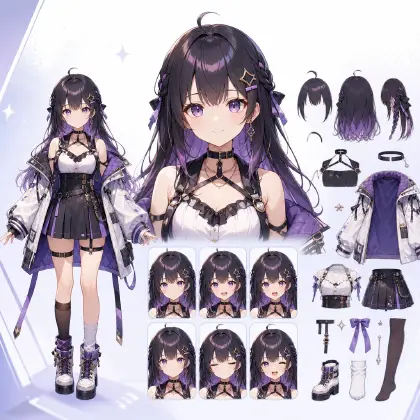
Define the lead through action. Name the character, age range if useful, visual anchors, and what they do when stressed. A short film character should be readable from posture and choice, not biography.
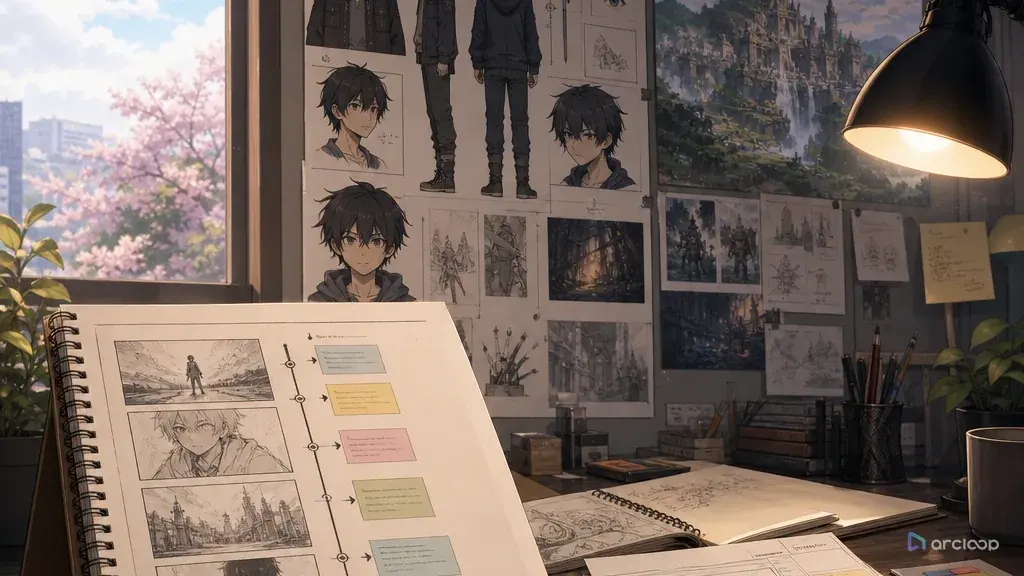
Break the story into three to five beats. Setup, complication, choice, consequence, final frame is enough. Each beat should be filmable as a shot or panel.
Assign camera and duration. A 20- to 45-second short can be planned as five short shots. A very short 8- to 12-second clip may need only three shots. Keep camera changes simple so continuity survives.
Attach references to jobs. Use the character sheet for identity, scene concept for location, prop design for the key object, and a visual reference for visual unity. Do not let a style reference redesign the lead.
Review the rough board before generating polished clips. Ask whether the short has a beginning state, a pressure, a choice, and a changed final image. If not, fix the beat structure first.
Turn the Idea Into a Character Asset, an Outline, and Shot Cards
Build the lead as a character asset in My Assets, any recurring location or prop as a Scene or Prop asset, and write the beat sequence into the Story Outline. Then turn each beat into a shot card with an @ reference to the character, adding voice direction if the scene needs it. The work stays in one project instead of being planned somewhere else and copied back later.
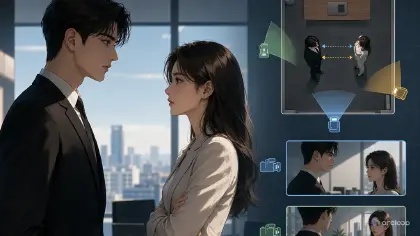
Use Three-Shot Continuity Board for the first pass. Three shots force discipline: setup, choice, consequence. If the story needs more shots, add them after those three already work.
Keep the review order boring: beat clarity, character consistency, shot continuity, final-frame readability, polish. A beautiful clip with no choice is still unfinished. A rough board with a clear turn is worth improving.
For short projects, do not overbuild a full series bible. Store only the rules that affect this episode. Later can expand the world if the short earns it.
Example prompt 1: Umbrella Return Three-Shot Board
Build Kinu Saye as a character asset first — a quiet bookstore clerk with chin-length dark violet hair, round amber glasses, a brown cardigan, and a habit of gripping her sleeve when nervous — then create a three-shot storyboard for an original single-episode 2D anime short called "Borrowed Umbrella" in production notes, with `@Kinu Saye` carrying her identity into every shot. Setting: small neighborhood bookstore at closing time during spring rain. Emotional turn: Kinu stops avoiding an apology. Shot 1 setup: @Kinu Saye finds a blue umbrella with a cracked wooden handle behind the counter and realizes it belongs to the customer she snapped at earlier. Shot 2 complication and choice: the customer is already across the street at the bus stop, rain getting heavier, and @Kinu Saye hesitates at the door. Shot 3 consequence: @Kinu Saye runs out, returns the umbrella, and bows with a small relieved smile as the shop lights glow behind her. Clean anime storyboard panels, readable acting, no fake text, no extra subplot, no new cast crowd.
This prompt finishes one emotional turn. It hints at a larger neighborhood but does not ask the short to explain everything.
Example prompt 2: Final Clip Prompt for the Clockroom Drum
Generate a 12-second 2D anime short-film sequence with three clean shots. Lead: Enji Holt, an original school drummer with sandy hair, a red practice jacket, black wrist tape, and a dented silver metronome clipped to his bag. Setting: empty music room after sunset, curtains moving softly, chairs stacked near the wall. Story turn: Enji chooses to play the first beat after freezing during rehearsal. Shot 1, 4 seconds: close-up of the metronome ticking unevenly in his hand while his fingers tremble. Shot 2, 4 seconds: medium shot as he sits at the drum kit, exhales, and raises one stick. Shot 3, 4 seconds: low front shot as he strikes one clean beat and the sunset reflection shakes across the cymbal. Style: warm cel-shaded anime, quiet room tone, stable character design. No extra band members, no concert crowd, no text, no logo, no face redesign, no 3D render.
The sequence uses only one action as the payoff. That restraint makes the final beat easier to read.
Example prompt 3: Short-Film Structure Revision Pass
Revise the selected short-film board for an original anime scene about Pella Nox, a junior ferry signaler with white hair tips, a navy rain poncho, and a brass whistle on a red cord. Approved setting: foggy river ferry dock at dawn. Current problem: the board starts with a long history of the ferry guild and ends before Pella makes a choice. Keep the character, dock, fog, whistle, and dawn palette. Replace the structure with a clear single-episode turn: setup, Pella hides the whistle because she is afraid of signaling alone; complication, the ferry drifts before the senior signaler arrives; choice, she blows the cracked whistle once; consequence, the dock lamps answer and the ferry corrects course; final frame, Pella lowers the whistle with shaking hands but stands straighter. Three to five storyboard panels, readable action, no lore dump, no new villain, no fake text.
This revision removes the series-bible opening and gives the short a final image that proves change.
Common Mistakes in Single-Episode Anime Shorts
The biggest mistake is confusing a premise with a story. "A girl lives in a clock city" is a premise. "She stops the wrong clock even though it costs her last train home" is a story beat.
Another mistake is starting too early. Childhood prologues, faction histories, and long world explanations usually delay the choice. Begin close to the moment that matters.
Creators also end on atmosphere instead of consequence. A sunset, smile, or camera pullback works only if the viewer knows what changed.
A fourth mistake is adding too many characters for the runtime. Every extra face creates identity and continuity work. Use props, sound cues, or offscreen pressure instead.
Finally, do not polish before the beat is readable. If setup, complication, choice, and consequence are unclear in storyboard form, final video will not fix the structure.
FAQ
How long should a single-episode anime short be?
It can be as short as 10 seconds or as long as a few minutes, but the structure should still complete one turn. For AI anime workflows, shorter boards are easier to control first.
How many shots do I need?
Three shots are enough for many shorts: setup, choice, consequence. Use five when you need a clearer complication or final hold.
Should I build a world before making the short?
Build only the world rule that affects the episode. A full bible is unnecessary unless you are planning a series. For one short, the visible pressure matters more than deep lore.
How do I make the ending feel complete?
End with a concrete consequence. Show the returned object, opened door, answered signal, changed posture, repaired prop, or other visible proof that the choice happened.
How do I turn an idea into a complete anime short?
Build the lead as a character asset, write the beat structure into the Story Outline, and lay the shots out on the Storyboard with @ references carrying identity into each one. Because it is all in one project, you can check continuity before you spend on final-quality generation.